The Wild Records for Angraecum Sesquipedale Point to a Hot, Wet Lowland Plant
Almost everything written about this orchid is really about a moth. Darwin saw a dried specimen in 1862, measured the nectary at close to a foot long, and said there had to be an insect in Madagascar with a tongue to match. He was right, and the confirmation arrived decades after his death. It is a wonderful story and it has crowded out a more useful question, which is where the plant actually lives.
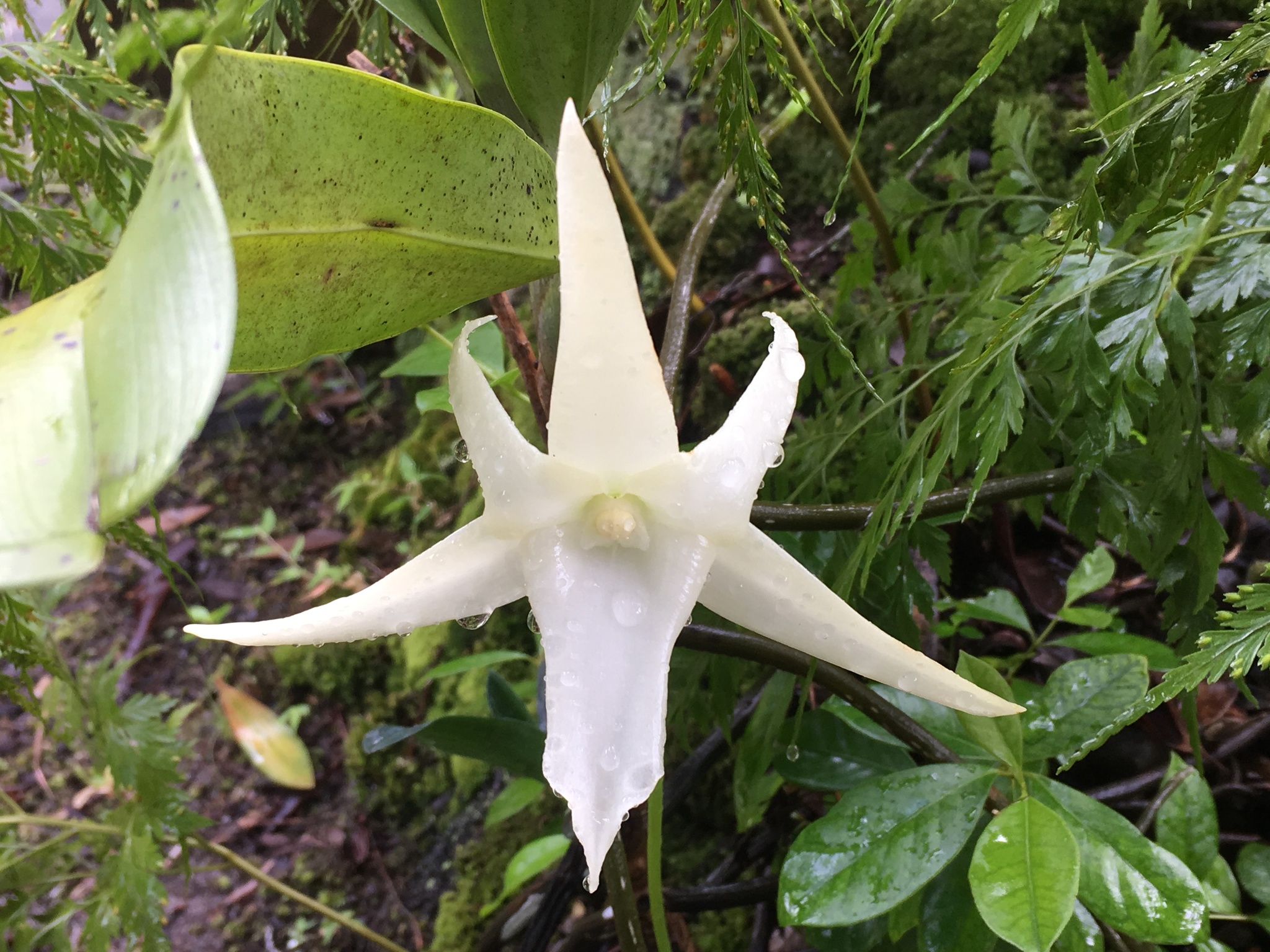
Photo: Jean-Paul Boerekamps, via GBIF (CC0)
The occurrence data gives a blunt answer. There are 316 records of Angraecum sesquipedale in GBIF worldwide, and 223 of them sit in Madagascar. The remainder are mostly cultivated material in northern hemisphere institutions: ten in the United States, three in the United Kingdom, a scattering across Belgium, Germany, Sweden, and Ireland. For a plant this famous, 223 wild-country records is a thin base.
Where the Malagasy Records Sit
Plot the Madagascar records and they cluster along the eastern side of the island. One well-photographed observation sits at roughly 18.6 degrees south, 49.2 east, which puts it close to the coast near Toamasina. Another lies further north around 15.7 south, and a third well down in the southeast near 24.7 south.
That is the eastern littoral strip, and it matters for culture because of what that strip is. Warm year round, very humid, drenched by the trade winds coming off the Indian Ocean, and low. This is not a montane cloud forest plant, and it is not a plant that experiences a proper cold season.
Growers who kill this species usually do it by treating it like a cool-growing angraecoid. The genus is large and it spreads across a lot of altitude in Madagascar, so a habit of grouping them together produces bad results. Sesquipedale sits at the warm end.
What That Translates To on the Bench
Warm nights. Aim for a minimum around 16 to 18°C and be comfortable letting days run into the high twenties. The plant tolerates a brief cooler spell and it does not want a winter rest in the way a deciduous Malagasy species might.
High humidity, ideally 70% or better, with air movement to go with it. The east coast of Madagascar is wet, and a plant adapted to that dries out badly in a heated living room.
Bright light, short of direct midday sun. In habitat these grow as epiphytes in positions that get real light, and a plant kept too dark will make leaves and never flower.
Water all year. Reduce a little in the cooler months if your growing area runs cold, but do not impose the hard dry rest that some Malagasy orchids want.
The Moth, Briefly
Since it will come up anyway: the pollinator is a hawkmoth with a proboscis long enough to reach the bottom of that nectary, and the match between flower and insect is one of the cleanest examples of coevolution anyone has. Darwin published the prediction. Naturalists described a moth fitting it around forty years later. Film of the moth actually feeding at the flower took until the 1990s.
None of which helps you grow the plant, but it does explain why the flower is shaped the way it is. That spur is a delivery mechanism built for one customer.
A Note on the Records Themselves
Two hundred and twenty-three Madagascar records is not a population estimate. It is a count of how many times someone with a GPS and an account recorded this species, which reflects road access and botanical expedition history as much as it reflects the orchid. Eastern Madagascar is comparatively well travelled by collectors. The interior is not.
Treat the map as evidence of where the plant has been seen, and treat the gaps as unknown rather than empty. The climate signal is still reliable, because every confirmed record points at the same kind of place.
Warm, wet, and low. Grow it that way.