Cypripedium Calceolus Has 100,916 Wild Records and Only 396 of Them Are British
The lady’s slipper is not a rare orchid. Across its range there are 100,916 occurrence records in GBIF, which puts it among the better-documented wild orchids on the planet. France holds 20,357 of them. Sweden has 18,555, Switzerland 13,915, Finland 13,838, Germany 12,119. Russia, Austria, Norway and Estonia all run into the thousands.
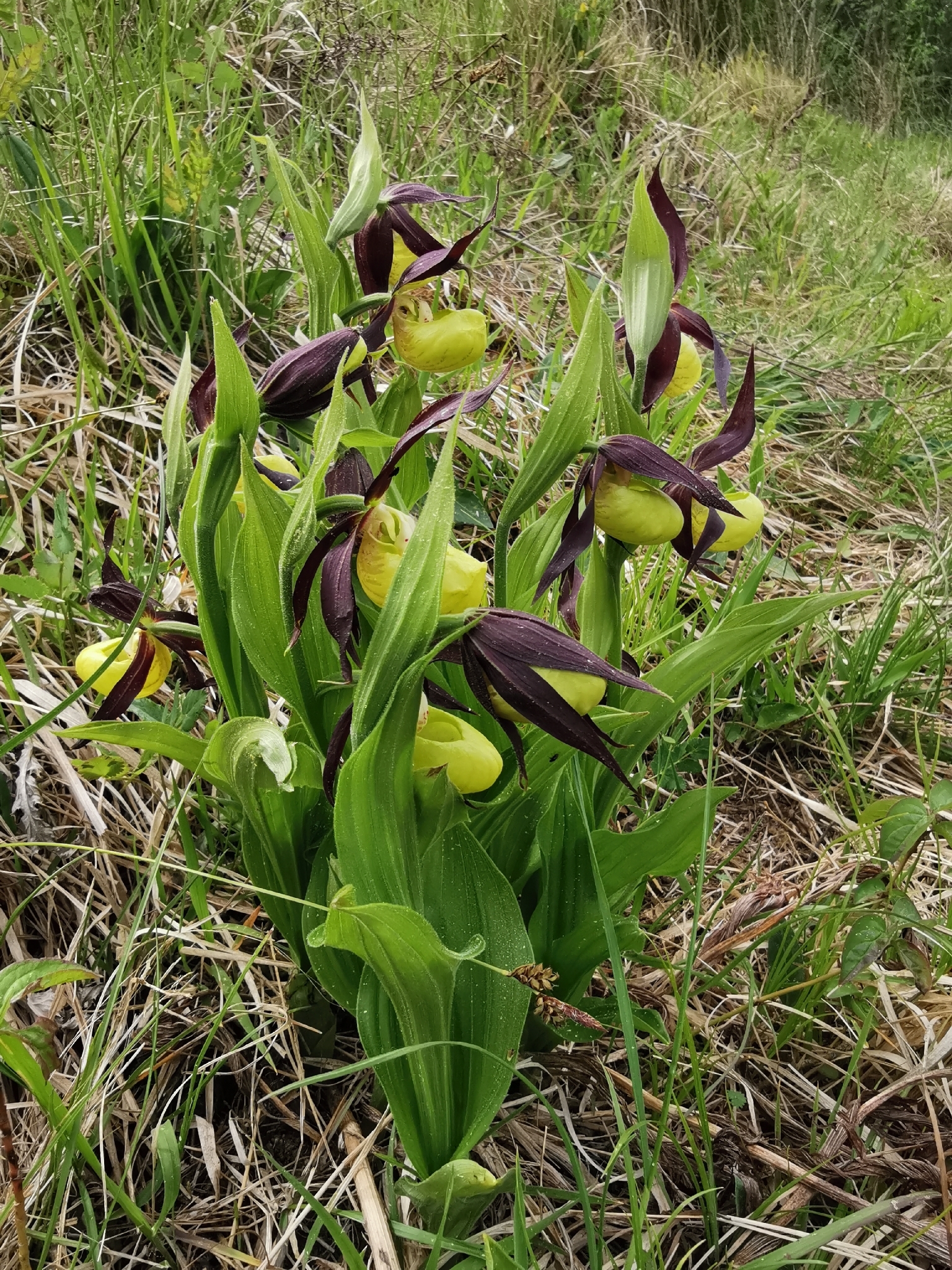
Photo: cpu, via GBIF (CC0)
Then there is the United Kingdom, with 396. That is under four tenths of one percent of the global total, for a plant that is common enough in the Alps that Austrian walkers photograph it casually in May.
The British Number Is a Record of Collecting
Britain sits well within the climatic range of this species and once had it in quantity across the limestone country of northern England. What happened next is one of the better-known stories in European botany. Victorian plant collecting, and the fashion for digging wild orchids for private gardens, stripped the population through the nineteenth century. By the middle of the twentieth century the species was down to a single known wild plant in Yorkshire, which spent decades under guard during its flowering season.
Reintroduction work using propagated stock has gone on for years since, which is where a slice of those 396 records comes from. The number is climbing from a floor of essentially zero.
Set it against France and Sweden and the contrast is the whole lesson. The plant did not fail in Britain for want of suitable habitat. It was removed.
Which Is Why You Buy Flasked Plants
Cypripedium calceolus is protected across Europe and wild collection is illegal in every country that has it. That part is straightforward. The part that trips people up is the second-hand market, where plants of uncertain origin still turn up at sales and online.
Nursery propagation from seed is now well established for this genus, and flasked or deflasked seedlings of calceolus and its hybrids are available from specialist growers. They are slower and more expensive than a dug plant and they are the only version worth owning. A wild-collected clump usually dies anyway, because the root system does not survive lifting and the plant has lost the fungal partner it was growing with.
Growing It
This is a genuinely hardy terrestrial, and the mistakes people make come from treating it as a tender greenhouse orchid.
It needs a real winter. The species grows through Finland and Russia, and the dormancy is not optional. A cold period with the crown frozen or near it is part of the annual cycle, so a mild frost-free greenhouse is worse for it than an open garden in a cold climate.
It wants alkaline ground. The strongholds in France, Switzerland and northern England are limestone. Work grit and limestone chippings into the planting mix and avoid ericaceous compost entirely.
Dappled shade suits it, of the kind found at a woodland edge or in open scrub rather than deep canopy. Moisture through the growing season, sharp drainage underneath, and no waterlogging in winter while the plant is dormant.
Flowering runs to May and early June across most of the range. The two Austrian records photographed for this piece were both taken in the first half of May.
Patience Is the Main Requirement
Seed-raised plants take years to reach flowering size, and a deflasked seedling bought this spring is not going to bloom next spring. Established clumps expand slowly and resent disturbance, so the correct approach after planting is to leave it alone.
Growers used to the pace of tropical epiphytes find this maddening. A Phalaenopsis rewards you within a season. A Cypripedium makes you wait most of a decade and then keeps going for thirty years.
The 100,916 records exist because the plant is tough and long-lived where people let it be. The 396 exist because in one country they did not.