Phalaenopsis Amabilis Has 65 Photographed Wild Records, and It Is Behind Every Supermarket Orchid
Filter GBIF to Phalaenopsis amabilis records that carry an openly licensed photograph and you get 65 of them. Indonesia accounts for 32. Malaysia has four, Papua New Guinea three, the Philippines one, and thirteen carry no country at all. For the species standing behind the most mass-produced houseplant orchid on earth, that is a remarkably quiet paper trail.
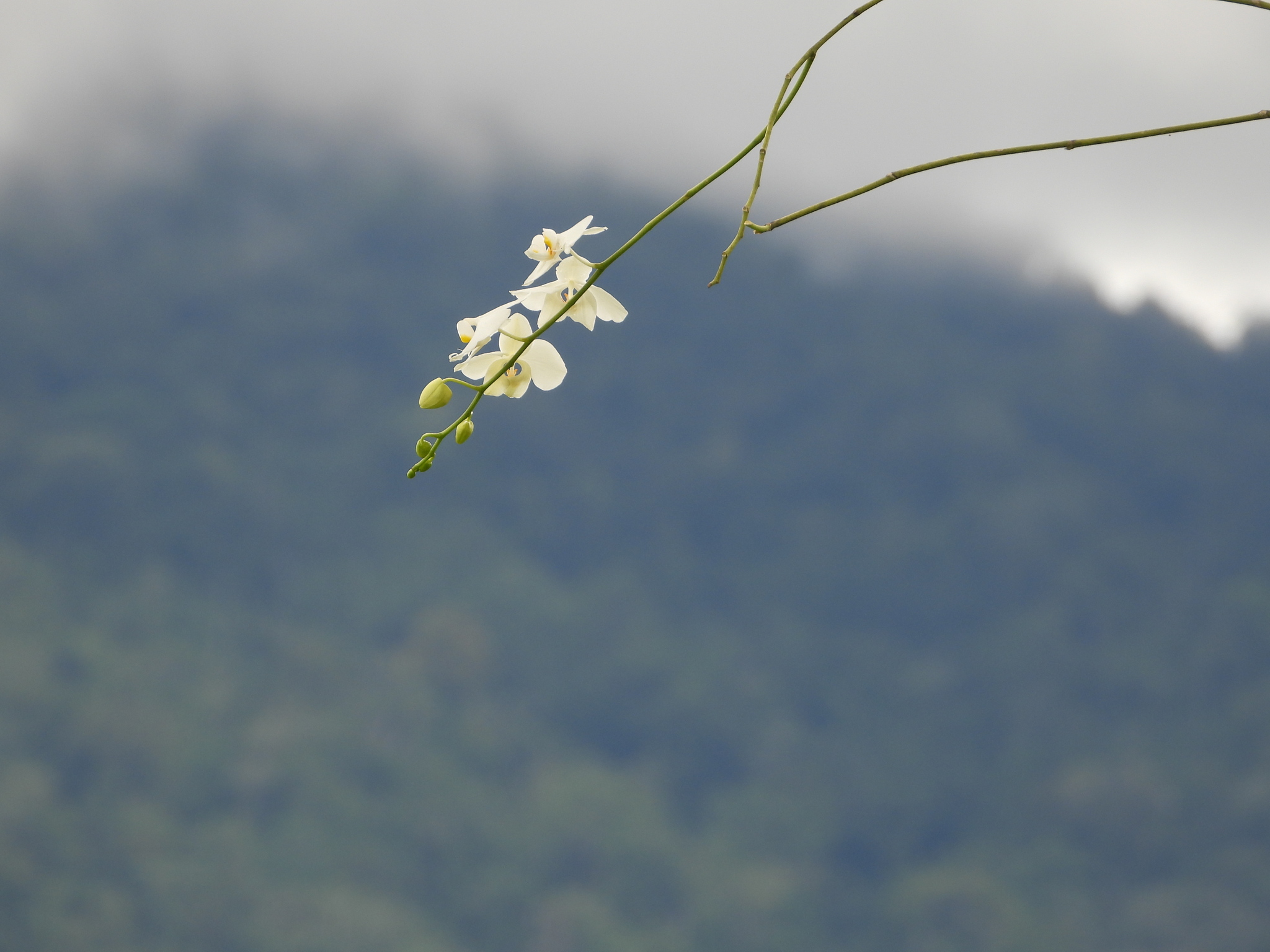
Photo: Светлана Царахова, via GBIF (CC0)
The Plant on the Shelf Is Not This Plant
Worth stating plainly, because it causes a lot of confusion. The white Phalaenopsis sold in supermarkets is a complex hybrid, generations removed from any wild species, bred for fast production, a predictable spike, and tolerance of rough handling in transit. Amabilis is in the ancestry, along with a good many others.
That matters for culture in one direction only. A hybrid bred through decades of greenhouse selection is far more forgiving than the species. If you buy actual P. amabilis from a specialist because you liked the supermarket plant, you are taking on something fussier.
Where the Wild Records Sit
The Indonesian records cluster near the equator. Two of the best-photographed sit at around 1.5 degrees north, which is northern Sumatra. The species runs from there through the Malay archipelago into New Guinea and north into the Philippines.
One and a half degrees off the equator is a specific kind of climate and it is the most useful thing in this dataset. Day length barely changes across the year. There is no cold season at any point. Temperatures sit warm and steady, humidity stays high, and rainfall is heavy for most of the year with no true dry period in the wetter parts of the range.
This is a lowland equatorial epiphyte, and it has essentially no experience of winter.
Which Explains How People Kill Them
The common failures all come from imposing seasons on a plant that never evolved to handle them.
Cold is the main one. Below about 15°C the plant stops taking up water properly and roots start to rot even in a medium that is only normally damp. A windowsill behind a closed curtain on a winter night drops much further than the room does, and that gap is where a lot of plants die.
Dry air is the second. Central heating pulls indoor humidity into the twenties and thirties in winter, against the 70% and up these plants come from. Leaves go limp, the grower reads it as thirst, waters more, and finishes off roots that were already struggling in cold wet medium.
Direct sun is the third. Equatorial forest light is bright and filtered, which is not the same as a south-facing pane in summer.
Growing the Species
Warm all year. Minimum around 18°C at night, and do not let it get colder in winter as a matter of routine.
Humidity above 60% if you can manage it, with air movement so leaves are not sitting wet.
Moderate light, roughly what you would give a hybrid or a little less. Leaves should be a mid green rather than dark.
Water consistently through the year. Amabilis does not want the dry rest that some Phalaenopsis species take, and the equatorial range is the reason.
Mounted or in an open bark mix, with the roots getting plenty of air. Many growers do better with this species mounted and watered often than potted.
A last point that is easy to miss: P. amabilis is one of Indonesia’s national flowers, known there as puspa pesona. The plant most of the world meets as a disposable supermarket purchase carries national status in the country it came from.
Sixty-five photographed wild records, and several hundred million hybrids shipped a year.