Miltoniopsis Vexillaria's Oldest Records Are Greenhouse Plants in Pittsburgh and Chicago
The pansy orchid has 245 GBIF records. Colombia accounts for 174 and Ecuador for 25, which matches where the species actually grows. Then the list turns odd: Sweden five, Britain three, Germany two, the United States two, Ireland one.
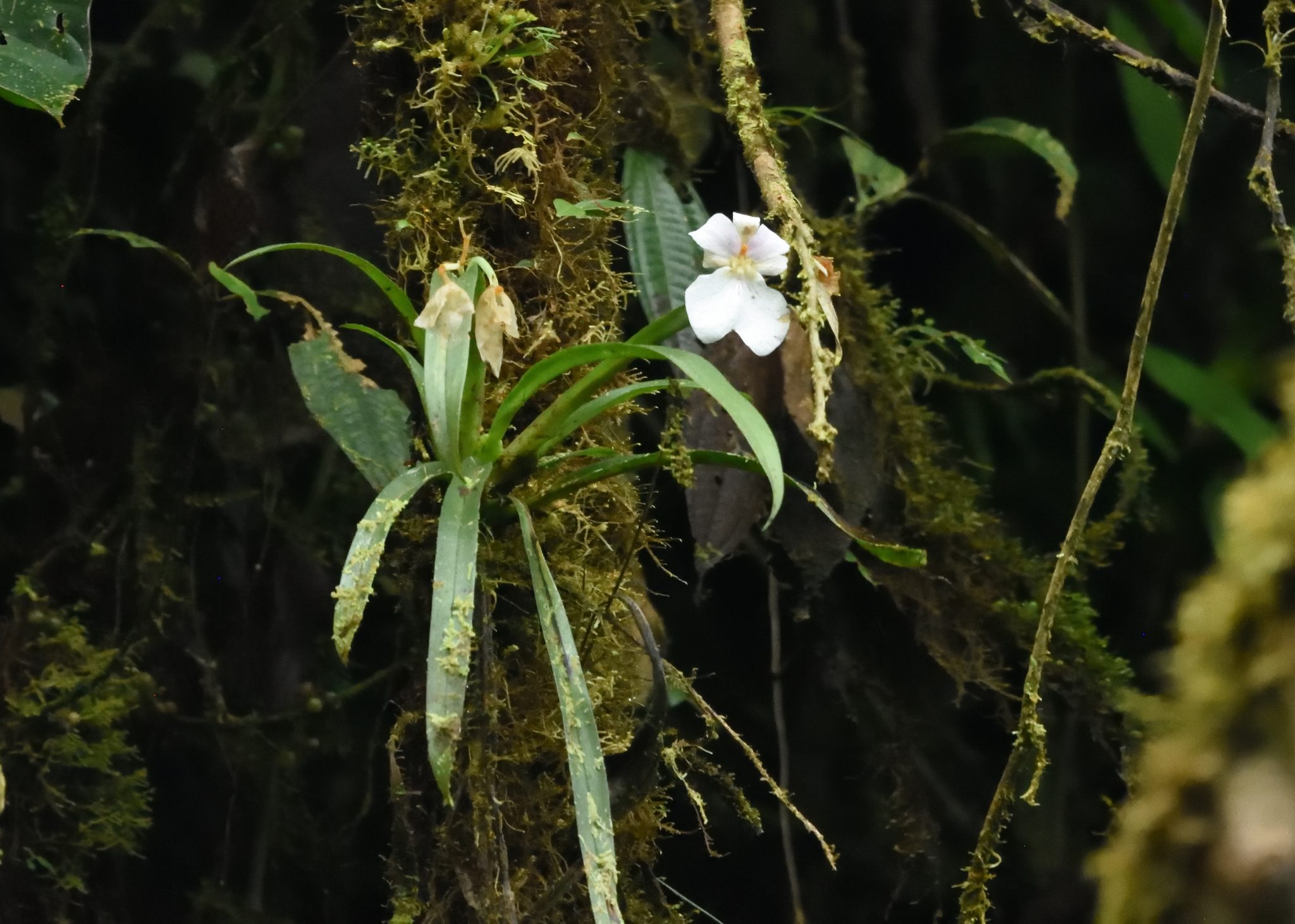
Photo: Guy Babineau, via GBIF (CC0)
Open the American ones and the dates are the interesting part. A Carnegie Museum of Natural History sheet collected in 1916, locality Pittsburgh. A Field Museum sheet from 1945, this one genuinely from Caldas in Colombia, collected by K. von Sneidern.
A 1916 orchid specimen from Pittsburgh is a greenhouse plant. Somebody pressed a flowering stem from a heated conservatory in western Pennsylvania and it has sat in a cabinet for over a century, indexed alongside plants collected in Andean forest.
Why This Species Was in Pittsburgh
Miltoniopsis vexillaria was one of the commercial successes of the late Victorian orchid trade. Large flat flowers in pink and white, a shape people immediately read as a pansy, and enough vigour to survive shipping. It was collected out of Colombia in bulk and sold hard on both sides of the Atlantic.
The consequence shows in the record trail. Institutional herbaria in Europe and North America hold sheets from cultivated material because that is what was in front of botanists, while systematic field collection in the Chocó came later and in smaller quantities.
For a grower this is mostly a curiosity. For anyone reading distribution data it is a caution: a country facet count mixes wild occurrence with two centuries of horticulture, and the small European and American numbers are almost always the second thing.
Where It Actually Grows
The modern field records concentrate in western Colombia. The photograph above comes from Condoto in the Chocó, at around 5.25 north and 76.11 west, which is some of the wettest forest on earth. Other clusters sit in Antioquia further northeast.
This is mid-elevation Andean forest on the Pacific slope. Warm days, cool nights, and rain that does not really stop. The species has no dry season to adapt to.
Growing It
Intermediate to cool. Nights around 13 to 16°C, days in the low twenties. It handles slightly more warmth than a Dracula and considerably less than a cattleya.
Even moisture all year. No rest period, no drying out between waterings. The roots are fine and they die quickly when they dry, and a plant that loses roots will then collapse over the following months even though the leaves look fine at first.
Low mineral water. This genus is notably sensitive to salt buildup, and the classic symptom is blackened leaf tips creeping down the foliage. Many growers who report that problem are watering with hard tap water and feeding at full strength. Flush the medium regularly and feed weakly.
Shade. Leaves should stay a light fresh green. Direct sun burns them.
Fine bark or sphagnum, shallow pots, and repotting on a regular schedule, since the roots resent old sour medium.
Accordion pleating in new leaves means the plant dried out or got cold while the growth was forming. By the time you see it, the cause is weeks past.
The Name Confusion Is Worth Sorting Out
Plants sold as Miltonia and plants sold as Miltoniopsis are different genera with different needs, and the labels in general horticulture are still sloppy. Miltoniopsis is the Andean pansy orchid described here, cool and wet. Miltonia proper is Brazilian, warmer, with smaller and more starry flowers.
Buy a “miltonia” from a garden centre, treat it as Brazilian, and if it is actually a Miltoniopsis you will cook it. That mistake accounts for a large share of the plants that fail in their first summer.
The 1916 sheet in Pittsburgh at least had a heated conservatory and a full-time gardener behind it.