Ophrys Apifera Flowers in May and June, and 41,807 Wild Records Show It
Break the 41,807 GBIF records for the bee orchid down by month and the shape is almost comic in its clarity. January 640, February 965, March 854, April 2,379. Then May 12,966 and June 21,201. Then July collapses to 977, August to 58, September to 27.
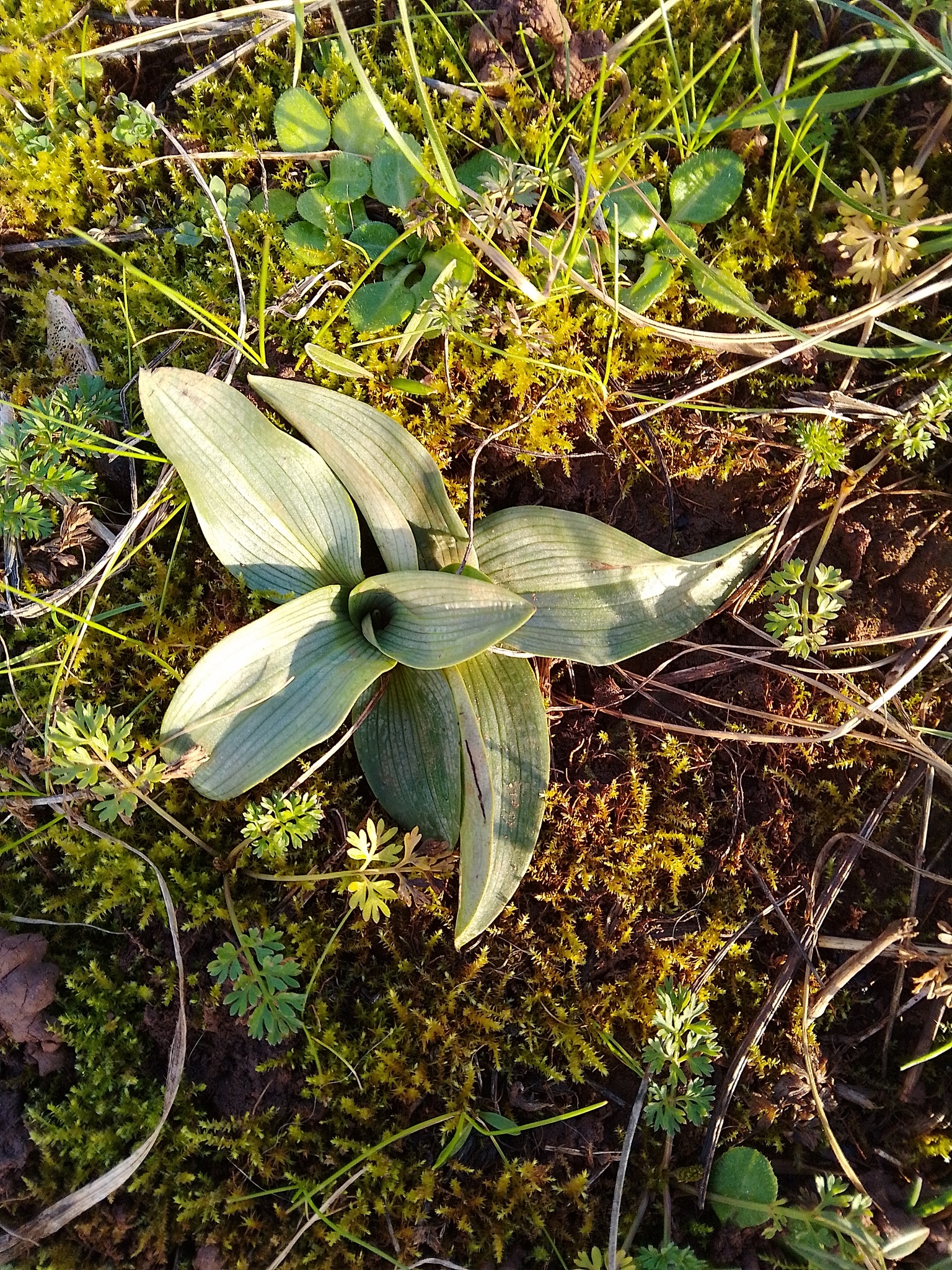
Photo: Bob Helson, via GBIF (CC0)
May and June together account for 82% of every record ever logged. That is a flowering season drawn straight from observation data, without anyone consulting a field guide.
Read the Winter Numbers Carefully
The 640 records in January are worth a moment, because they are a lesson in how this data behaves. A bee orchid is not flowering in a European January. What you are mostly seeing is records where only the year was known, which default to the first of the month or the first of the year when they enter the system.
Two of the photographed observations pulled for this piece carry dates of 1 January and 4 January. Both are from Britain, both are clearly plants in flower, and neither was photographed in midwinter. The date field is imprecise, not wrong in a way anyone should be alarmed by, and it is why the small counts in December, January and February should be read as noise rather than as evidence of an odd population somewhere.
The May and June spike is real. The winter floor is an artefact. Knowing the difference is most of what data literacy means when you are working with occurrence records.
The Deception That Mostly Stopped Working
The genus Ophrys is famous for sexual deception. The flowers mimic a female insect closely enough in shape, texture and scent that males attempt to mate with them, and pollen gets transferred in the process. It is one of the more remarkable things flowering plants do, and Ophrys has radiated into a great many species on the strength of it.
Apifera is the species where the trick has partly lapsed. Its intended pollinator is a long-horned bee in the genus Eucera, which is present across the southern part of the orchid’s range and largely absent from the northern part. In Britain and much of northern Europe the flower has no one to fool.
So it pollinates itself. The pollinia swing forward on their stalks and drop onto the stigma of the same flower, a mechanism you can watch happen over a couple of days if you find a fresh spike. Seed set stays high. The orchid has simply routed around a missing partner.
The practical consequence is visible in the population: self-pollination means less genetic mixing, and northern colonies tend to be less variable than Mediterranean ones where the bees still turn up.
Do Not Try to Grow It
This is the part growers do not want to hear. Ophrys apifera is a terrestrial with a summer-dormant tuber and a deep dependency on soil fungi, and it does not transplant. Lifting a wild plant kills it and is illegal in most of its range anyway.
It also has a habit that fools people into thinking they have a permanent colony. Bee orchids appear in a spot, sometimes in numbers, flower for a couple of seasons, and then vanish from that spot entirely and turn up forty metres away. The tubers are short-lived and the species behaves as a coloniser of disturbed calcareous ground. Roadside verges, old quarries, sand dunes, unimproved chalk grassland. Cut and fertilise that grassland and the orchid goes.
If you want bee orchids, the method is habitat, not horticulture. Stop mowing a patch of thin alkaline soil, keep the fertility low, and wait. Seed is dust-fine and travels on the wind, and colonies arrive on their own where the ground suits them.
For the bench, the genus to look at is anything but this one.
What the Map Is Actually Showing
Britain, France and Germany dominate the record count, which says as much about who owns a smartphone and an identification app as it does about orchid abundance. Recording effort is concentrated in northern Europe. The Mediterranean heart of the genus is under-recorded by comparison.
The month histogram is the trustworthy part. Tens of thousands of people, across decades and a dozen countries, all found this plant in flower at the same time of year.