Phalaenopsis Ambiance, When the Glow Fades a Little
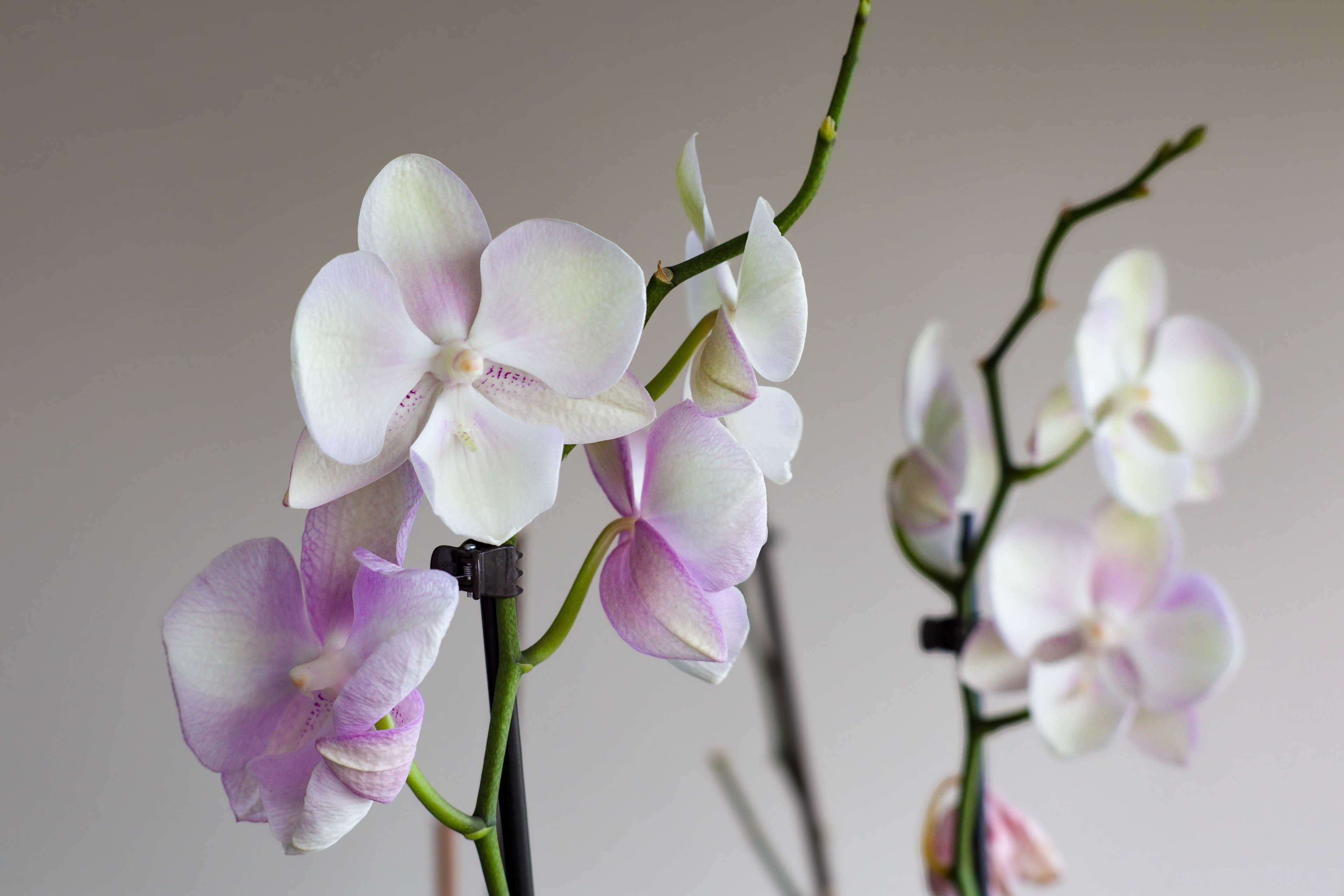
A Phalaenopsis that has lost some of its sparkle can feel like a quiet room after a party — the shape is still lovely, the potential still there, but the energy needs coaxing back. Looking at these soft, pale blossoms with their gentle wash of lavender at the edges, you can almost sense the plant trying to decide whether to push forward or rest. The stems arc elegantly, the flowers remain luminous, but beneath that calm exterior the plant is asking for a small reset. Reviving a Phalaenopsis isn’t dramatic work; it’s more like nudging a friend awake from a long nap and convincing them the world is worth participating in again.
The first thing growers should do is read the leaves the way you’d read the expression on a face. Plump, firm leaves with a subtle gloss mean the hydration rhythm is right. If they’re droopy or leathery, the plant is thirsty or stressed, and adjusting the watering schedule becomes the priority. Most Phalaenopsis prefer a predictable soak-and-dry cycle — not bone dry, not swampy, just that sweet spot where the media feels barely dry before you water again. If the orchid is potted in old bark that’s starting to break down, roots won’t get enough air and the plant slowly loses vigor. Repotting into fresh medium often brings a surprising revival, especially if you trim away any mushy roots and let the healthy ones breathe again.
Light is the other half of the conversation. These orchids thrive in what growers call “bright shade,” where daylight feels abundant but never harsh. When the blooms look washed-out or the spikes stall, the plant may be settling for less light than it wants. Moving it closer to a window with gentle morning sun or filtered afternoon light can wake it up. In this image, the flowers catch light beautifully but softly — that’s a good clue for the ideal environment. The goal is enough luminosity to encourage new spikes without tipping into scorching territory.
After that comes the quiet but crucial nutrient rhythm. A Phalaenopsis in bloom spends a lot of internal energy to maintain those petals; feeding it lightly and regularly with a balanced orchid fertilizer helps the plant rebuild its reserves. Many growers swear by a weak weekly routine, and honestly, once you see how quickly the leaves perk up, it’s hard not to believe them. Just keep the fertilizer gentle — the roots burn easily if pushed too hard.
And then, when the blooms fade, don’t rush the scissors. Some spikes can rebloom from a node lower down, especially if the plant is healthy and the spike still green. But if the plant looks tired or the spike begins to yellow, cutting it back lets the orchid focus its strength on roots and leaves again. It’s a bit like clearing the stage so the next performance can begin.
Reviving the ambiance of a Phalaenopsis isn’t about forcing anything. It’s about giving the plant just enough encouragement, stability, and clarity to remember what it’s capable of. With steady hands and a little patience, these elegant blooms return brighter than before — and somehow, the room feels alive again.