Why This Yellow Cymbidium Shows Exactly How a Well-Grown Orchid Behaves
Some Cymbidiums feel like they announce themselves before you even lean in close, and this yellow hybrid does exactly that. The flowers sit tightly along the spike, each one broad, waxy, and glowing with that saturated gold tone that breeders chase for years. The lip carries its freckles in a dense, deliberate pattern — a trait inherited from classic cool-growing lines — and the petals hold their shape with the kind of confidence that only comes from a plant grown in the right rhythm. Even through the protective wrap, you can see how cleanly the spike was built, how the leaves stand tall around it, and how the whole plant expresses a balance that experienced growers immediately recognize: this is a Cymbidium that received exactly what it needed, exactly when it needed it.
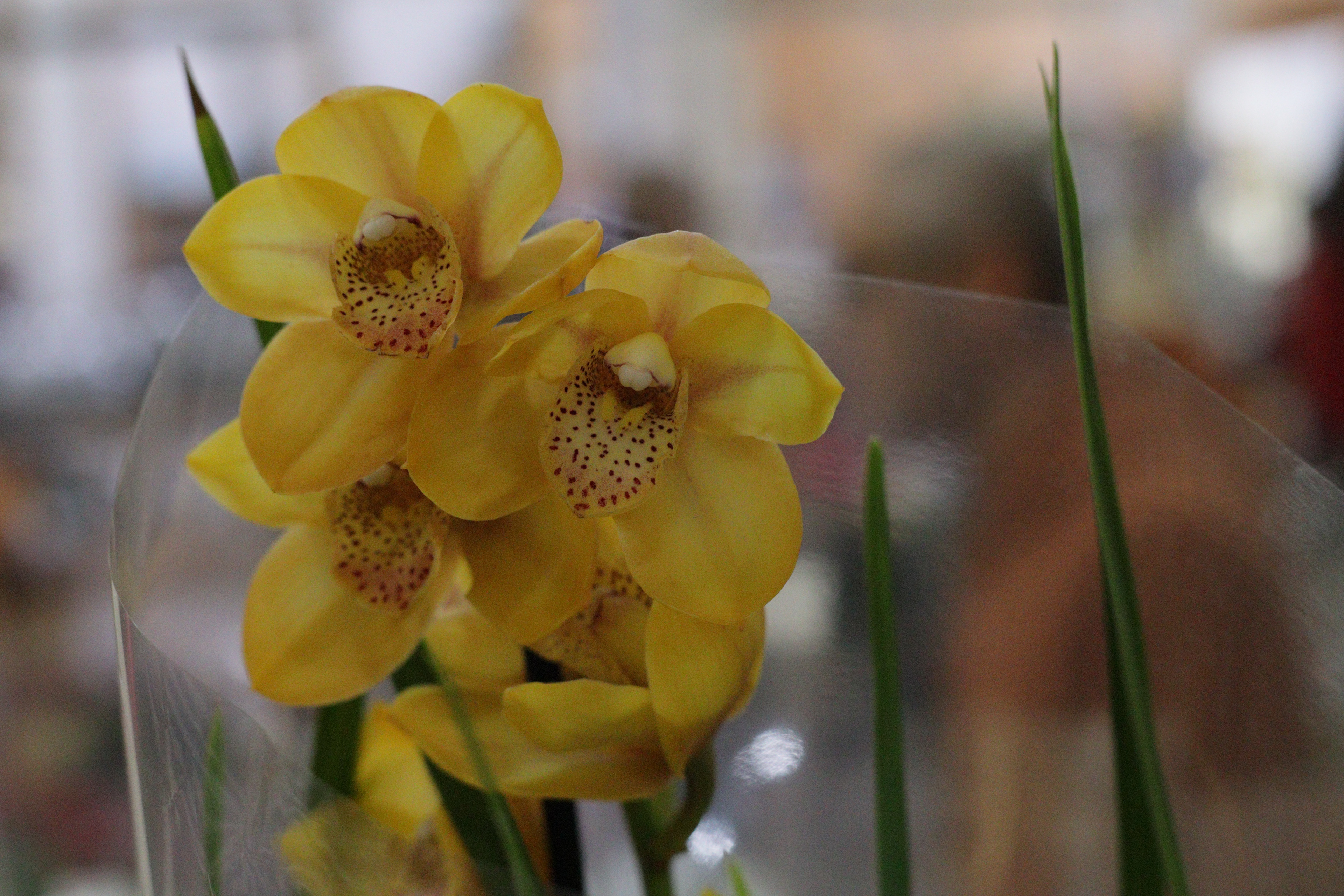
Cymbidiums are special because they combine the drama of a multi-flowered display with a growth habit that rewards consistency more than precision. When a hybrid blooms like this — evenly spaced flowers, uniform color, unblemished petals — it’s the plant confirming that the grower nailed the seasonal cues. These orchids don’t bloom on impulse. They wait for a long stretch of bright light, months of good feeding, strong pseudobulbs storing reserves, and then one decisive trigger: cool autumn nights. Once that temperature shift arrives, they stop building leaves and quietly switch into spike mode. The result is what you’re seeing here — a procession of flowers that opened in perfect sequence, each one identical to the next, with the lip patterning faintly pulling the eye into the throat like a flourish.
For growers, this is where the real appreciation begins. Cymbidiums aren’t fragile, but they’re honest. Give them enough light, and they respond. Give them regular water and fertilizer through spring and summer, and they build the thick pseudobulbs that power next year’s bloom. Set them outside for the season and let the nights drop into the low teens, and they start preparing spikes long before you notice. They don’t sulk, they don’t demand greenhouse perfection, and they don’t hide their preferences — they simply ask for steadiness. When you meet that steadiness, they produce exactly the kind of bloom show that fills up the frame in your photograph.
Here’s the grower’s rhythm that sits quietly behind a display like this:
Cymbidiums thrive under bright, filtered light, enough to cast a soft shadow. Their long, upright leaves show when the balance is right — neither dark and stretchy nor bleached. They require cool night temperatures in autumn, ideally 10–15°C, to initiate spikes; without those nights, the plant grows beautifully but refuses to flower. Through the warm months, they want consistent moisture and a potting mix that drains fast but doesn’t collapse — coarse bark, perlite, pumice, maybe a touch of coco or peat. They’re surprisingly heavy feeders, responding best to steady fertilizer during the growth season and a bloom-tilted formula as autumn arrives. Repotting isn’t a frequent chore; every 2–3 years is enough, ideally right after flowering as new growth starts to push. Even when in bloom, they prefer stability: same light, same temperatures, no sudden droughts or cold drafts.
When all of this falls into place, a Cymbidium doesn’t just produce flowers — it performs. It lines a spike with blooms that open cleanly, hold their color for weeks, and look like they’re lit from inside. This yellow hybrid makes that perfectly clear. It’s not just a pretty orchid; it’s the full expression of a plant that spent the year doing exactly what it was supposed to do, quietly and methodically. And for growers, that’s the real satisfaction — a bloom that doesn’t arrive by luck, but by the plant’s own sense of timing and the grower’s steady hand matching it stride for stride.