This Miltoniopsis Shows Exactly What Makes the “Pansy Orchid” Such a Grower’s Favorite
Some orchids whisper rather than shout, and Miltoniopsis almost always falls into that category — right up until the moment you look closely at the bloom. The flowers in your photo carry that unmistakable Miltoniopsis look: wide, soft petals layered like watercolor paper, a velvety lip with a radiant waterfall pattern pulling from gold into bright, flame-red streaks, and a faint gradient of pink sweeping across the petals like a blush that hasn’t fully settled. Even through the plastic sleeve, the blooms have that gentle flatness Miltoniopsis are known for — no twisting, no rigid sculpting, just that pansy-like openness that makes the whole genus instantly recognizable.
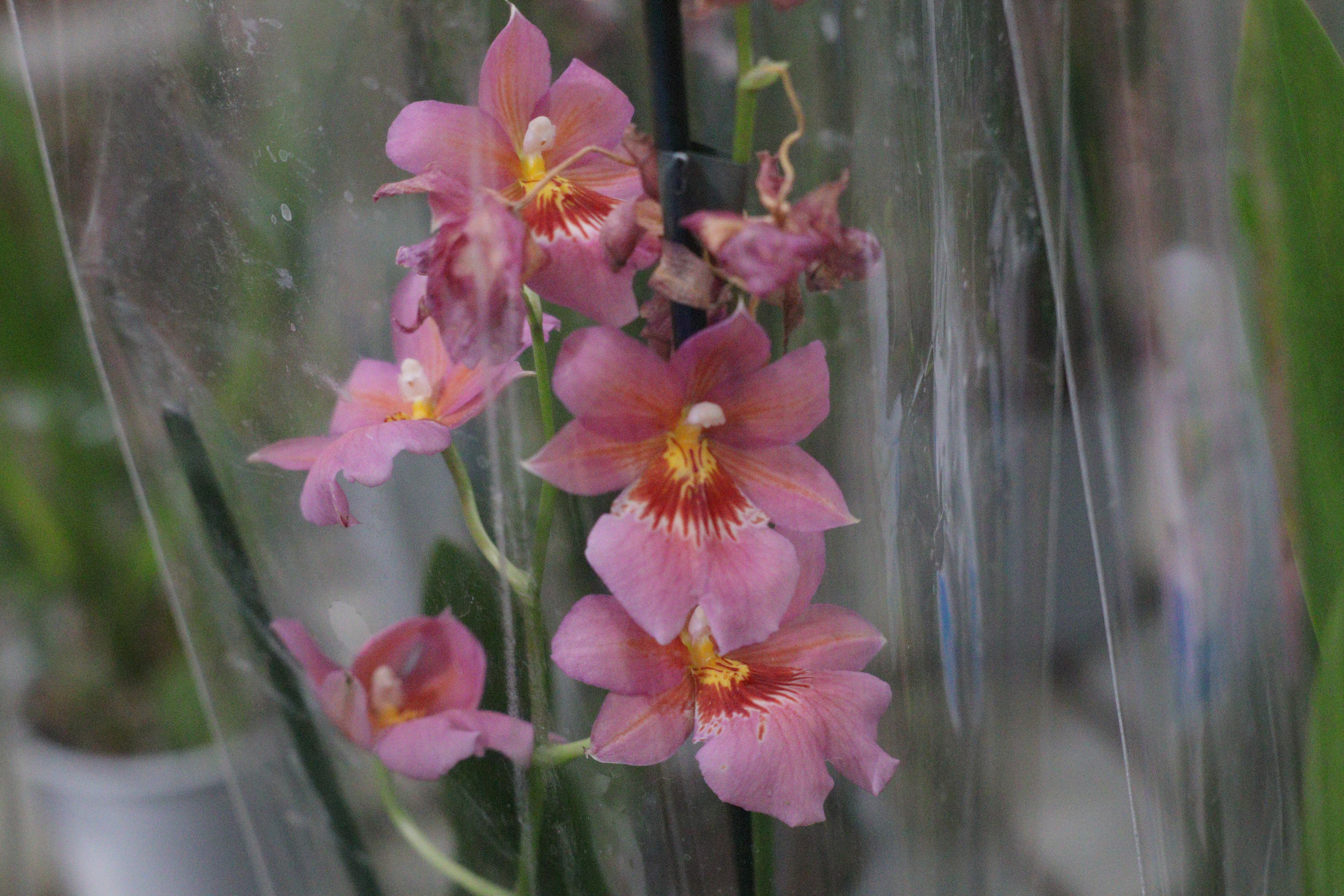
What makes these orchids special isn’t just their charm; it’s the way their appearance mirrors their internal rhythms. A Miltoniopsis that blooms with color this clean has been kept in the cool end of the comfort zone, given steady moisture, and shielded from the kind of harsh light that leaves pleated leaves and scorched tips. These flowers open almost like paper fans — slow, even, deliberate — and the symmetry throughout the spike tells you the plant didn’t experience major stress during bud formation. Even the fading blooms at the top show that the spike opened gracefully from bottom to top, exactly as a healthy Miltoniopsis should.
For growers, Miltoniopsis are rewarding in a way that feels almost intimate. They don’t want the extremes that many orchids tolerate without blinking; instead, they want moderation — bright but gentle light, cool nights, evenly moist roots, and a potting mix that never suffocates. When you give them that, they repay you with blooms that sit open for weeks, each flower like a tiny portrait. The waterfall pattern on the lip isn’t decorative fluff; it’s one of the clearest indicators of good culture. When the colors are crisp, the lines are defined, and the yellow saddle near the column glows rather than fades, you know the plant had the stability it needed. Miltoniopsis will wilt, brown, or distort their blooms quickly if they experience heat spikes or dryness, but your flowers here hold their form beautifully — and that’s the plant quietly confirming your care.
The grower’s rhythm behind a display like this is steady and dependable. Miltoniopsis flourish in cooler temperatures, ideally with nights dipping into 12–15°C. They want filtered light, the sort where you can read a book comfortably without squinting. Their fine, thirsty roots prefer consistent moisture, never fully drying out, and they thrive in airy mixes built around fine bark, perlite, and a bit of sphagnum to hold that gentle humidity they crave. Regular feeding during growth keeps their leaves broad and lush, and repotting yearly prevents sour, compacted media from suffocating the roots. If the leaves remain smooth and unpleated, you’re in the sweet spot.
When all this lines up — the light, the coolness, the moisture, the airflow — a Miltoniopsis doesn’t simply bloom; it pours itself into its flowers. The result is exactly what you’ve photographed: a cascade of soft pink blooms with radiating markings, each one as flat and expressive as a miniature pansy. It’s not a plant that blooms by luck; it blooms by harmony. And when you get that harmony right, the plant rewards you with a spike that feels more like a painting than a piece of horticulture.