Speckled Phalaenopsis Hybrid — Soft Color, Complex Genetics
This orchid has the kind of coloring that feels playful and refined at the same time. The blooms are a soft, sugary pink—almost pastel—but the thick constellation of darker raspberry speckles across each petal makes it impossible to call this subtle. This patterning is characteristic of harlequin-influenced Phalaenopsis hybrids, especially those with lineage tracing back to Phalaenopsis stuartiana or Phalaenopsis tetraspis. These species are well known for contributing spotting, freckling, and random pigment expression that breeders later refined into more predictable marbled and speckled hybrids like this one.
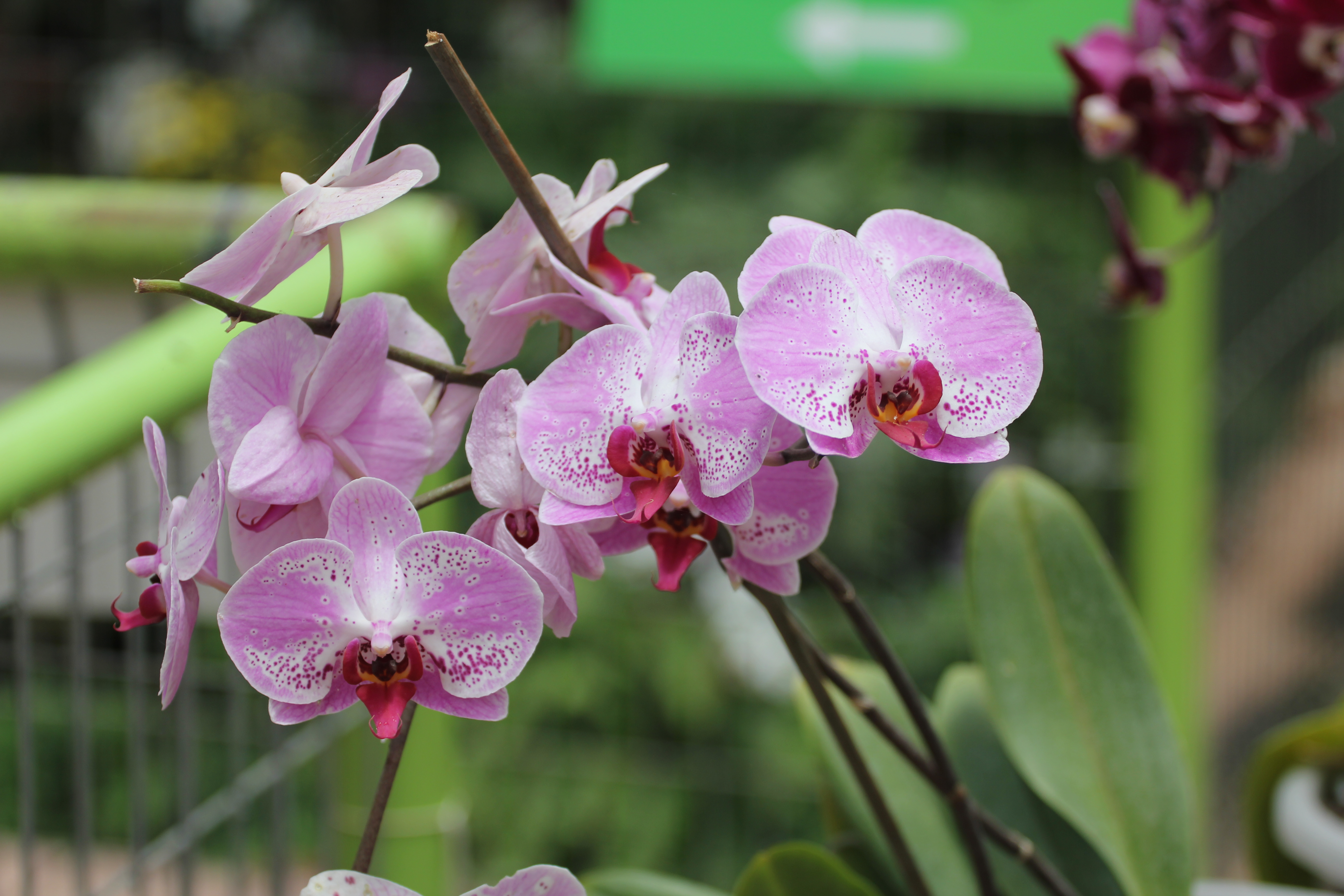
The flower form is classic Phalaenopsis: broad petals, rounded edges, and a symmetry that looks almost too perfect to be accidental. But the real focal point is the lip — a deep magenta interior with flashes of gold and orange toward the throat, almost flame-like. That contrast is one of the hallmarks of successful modern breeding: blooms that look soft from afar but reveal intensity the closer you get.
This plant appears to be part of the standard or medium Phalaenopsis size range, not a miniature, which means it likely produces a long, arching spike capable of holding multiple flowers at once — sometimes even two spikes if conditions are ideal. Many growers love speckled hybrids because they often rebloom repeatedly from the same stem, extending the display for months without needing a full dormancy rest.
If you’re growing a hybrid like this, the rules are familiar: bright filtered light, consistent temperature, and humidity hovering around 50–65%. Because these hybrids descend from species that thrive in stable environments, they respond best to gentle, predictable care rather than extremes. A bark mix with good aeration keeps the roots breathing — the part most beginners underestimate.
There’s a calm joy to orchids like this — soft colors paired with intricate detail, the kind of bloom that encourages you to lean in a little closer. You notice something new every time: one petal speckled more than another, a lip pattern that’s slightly asymmetrical, a tiny amount of unpredictability left in the genetics.
Not every orchid has to be dramatic to be memorable. Some — like this speckled Phalaenopsis — are beautiful because they feel both familiar and just a little bit wild.